
The YMCA in Bath first opened in 1864 at 19 Green Street, but its early years were marked by a series of moves as the organisation grew and developed. Later that same year it relocated to 1 Milsom Street, before moving to 18 New Bond Street in 1869 and then to 4 Bridge Street in 1872. This proved to be another temporary home and, at the beginning of 1873, the YMCA established new headquarters at 5 Quiet Street. It remained there for fifteen years before making the move, on 18 October 1888, to its current home in Broad Street. The foundation stone of the Broad Street building was laid on 23 November 1887 by the Bishop of Bath and Wells.
In its earliest days, the purpose of the YMCA in Bath was focused on the “career of usefulness in interest of the young men of Bath.” Activities reflected this mission and included a Bible class, weekly prayer meetings, discussion groups and a programme of public lectures. A library was established and generously supported, alongside a comfortable reading room where members could gather and learn. Physical activity played a smaller role at first, being largely limited to cricket. Cycling arrived in 1886 when a tricycling club was formed and the YMCA purchased two tricycles for members’ use.
The move to Broad Street marked an important step forward. The new building provided a hall, known as the Jubilee Hall, capable of accommodating up to 400 people for public meetings. It also housed a gymnasium, a large reading room, parlour, several recreational and meeting rooms, a suite of bedrooms and a secretary’s office. In a reflection of the YMCA’s entrepreneurial spirit, the building incorporated two shops—both of which remain in place today—helping to generate income and foster a sense of social enterprise.
The Broad Street premises were actually opened by George Williams, the founder of the YMCA and he donated £50 of his own money to the work – which was a significant sum of money then.
The Broad Street facilities quickly became a focal point for young men in the city. The Annual Report of 1891 proudly recorded:
“In reviewing the work of the past year the Committee look back with pleasure to a period of activity such as has not been equalled in the history of the Association since its establishment in the City. The usual agencies employed for the moral and spiritual welfare of young men have been in active operation, and the Association has attracted a larger number than at any previous period in its history.”
The gymnasium was considered central to the YMCA’s success, and the same report noted that:
“On many occasions convincing displays of muscular strength and agility have been publicly given.”
The facilities were not reserved solely for YMCA members. Schools and other organisations were also able to use the gymnasium, ensuring that it benefited the wider community of Bath.
As the organisation expanded, a wide range of clubs and activities emerged. Sporting clubs included cricket, football, swimming, boating, harriers, tennis, cycling, badminton and rambling. Alongside these were a variety of social and intellectual pursuits, including chess, bagatelle and photographic clubs. The YMCA had become a thriving hub of activity, friendship and personal development.
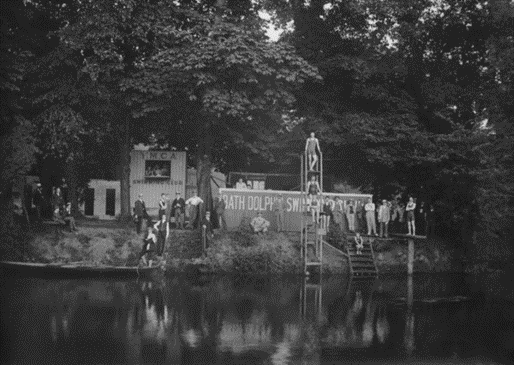
YMCA Swimming Club by Clevedon Pools on the River Avon
The outbreak of war in August 1914 brought profound changes. The YMCA aligned itself closely with the military effort, operating recreational huts in training camps across the country, with YMCA Bath supporting work on Salisbury Plain. Routine activities at Broad Street were largely suspended as many members volunteered for military service. Yet the building remained busy, with its doors thrown open to welcome visiting soldiers.
The hostel became particularly important during this period. Soldiers passing through Bath or staying for short periods found accommodation and support at the YMCA. Additional sleeping provision was created in the large hall, enabling up to 100 men per night to be accommodated. YMCA Bath also raised more than £5,000 for the national YMCA war fund. Through this contribution, a hut known as “The City of Bath Hut” was erected on one of the battlefields in France.
The organisation’s commitment to serving those affected by war continued after the conflict. In 1917 a YMCA centre was opened at the War Hospital in Combe Park by the YMCA National Council and was subsequently taken over by YMCA Bath in 1920. When demobilisation began in 1919 and servicemen started to return home, the YMCA issued a special invitation to all ex-soldiers, offering them free membership.
The YMCA’s work with young people also expanded during this period. In 1891, the YMCA Boys’ Brigade (4th Bath) was established and quickly flourished, with average attendances of more than fifty boys at meetings and Bible classes. Scouting was also popular, and the YMCA Scout group played an important role during the war years, helping the police and raising funds for wartime causes.
Recognising the growing need for dedicated youth provision, accommodation at 3 Princes Buildings was secured in 1923. This enabled the development of expanded work with boys and provided reading and study rooms, an assembly room for classes, lectures and social functions, a billiards room, a Scouts room, changing facilities and bathrooms.
The years following the war saw Broad Street continue as an important religious, educational, social and recreational centre. The building evolved to meet changing needs. The Jubilee Hall was converted into a billiards room containing four full-sized tables, while the former reading room became a lounge. Table tennis facilities were introduced and the gymnasium continued to thrive. As it had done throughout its history, the YMCA adapted to the changing needs and interests of young men in Bath.
In September 1921, a further YMCA centre was opened in Oldfield Park, offering a full programme of activities for the local community. Unfortunately, financial difficulties led to its closure in 1928, but its existence demonstrated the YMCA’s ambition to extend its reach across the city.
World war 2 say the YMCA in England develop mobile canteens to bring refreshments to the troops. These second-hand vans, painted camouflage green, were first used in East London and by the end of 1940 there were 500 vans bringing refreshments to troops, rescue workers and victims of bombing raids. Vans also travelled to Belgium and France. At the retreat of Dunkirk, YMCA remained on the beaches until ordered to leave.
The tea cars followed advancing and withdrawing armies. As well as serving mugs of tea, they sold cigarettes, chocolate, cake, hair cream, toothpaste and stationery. In contrast to the static huts of the First World War, the tea car was a more mobile service for increasingly changeable theatres of war. On the Home Front, particularly during the Blitz, these mobile canteens provided food and drink to those made homeless and hungry (WW2 reference from YMCA England and Wales website).
Fast forward to the 1970s and another significant chapter in the YMCA’s story emerged. The newer section of the current building was developed, substantially increasing accommodation capacity and enabling the organisation to welcome far more visitors to the city.
Older members of the public often tell us of their memories of attending discos and youth clubs at the Broad Street site.
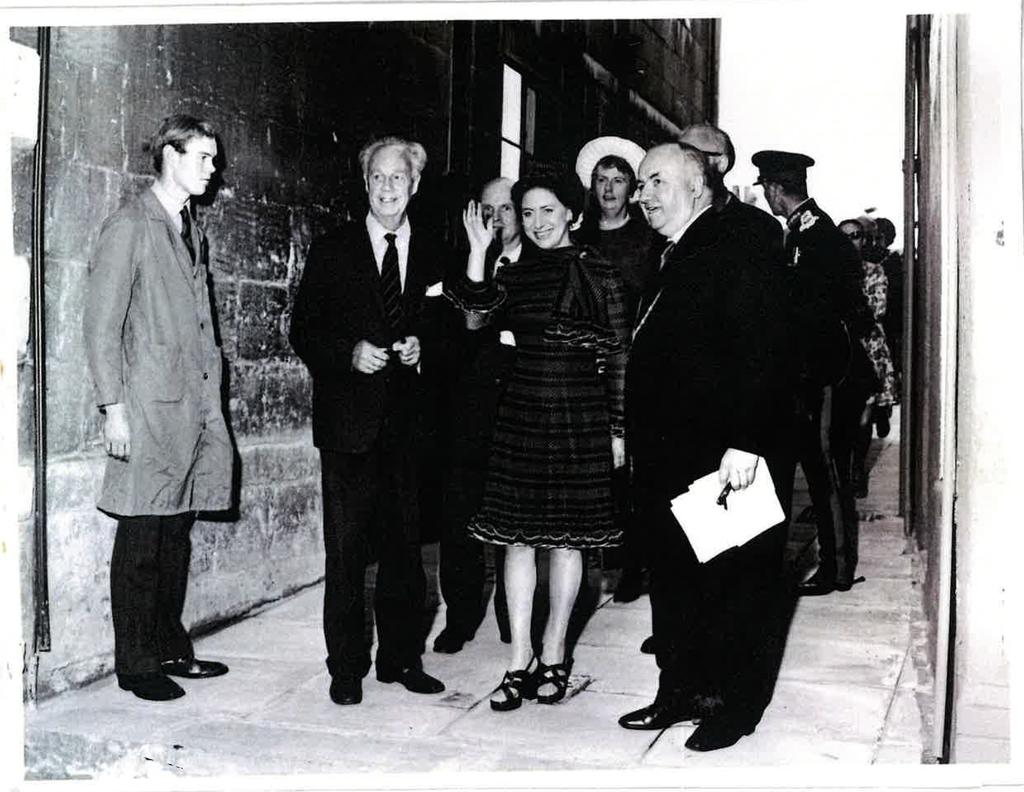
Image: Alick Rea MBE opens the new YMCA building in Broad Street with Princess Margaret. Image provided by Alick Rae’s daughter. Rae was chairman of the committee which raised funds for the new building.
Today, the Broad Street building continues to serve Bath in ways that reflect both its heritage and contemporary needs. It operates as a large social enterprise hostel, offering a range of accommodation from ensuite rooms to family rooms. The building also includes a dedicated floor for supported housing, alongside on-site support services for residents.
Health and wellbeing remain at the heart of the YMCA’s work. The original tradition of physical activity continues through a vibrant and well-used Health and Wellbeing Centre, comprising a large gym and fitness studio that offers a wide range of classes and opportunities for people across Bath to improve their health and wellbeing.
The YMCA in Bath is now part of YMCA Brunel Group, which operates across Bath, Bristol, Wiltshire, East Somerset and South Somerset. While much has changed since the organisation first opened its doors in 1864, its enduring commitment to supporting and strengthening communities remains as relevant today as it was more than 160 years ago.
References:
75 Years – A Short Historical Sketch of the City of Bath YMCA 1859 – 1934.
YMCA England and Wales regarding WW2 information.
YMCA Brunel Group website

